
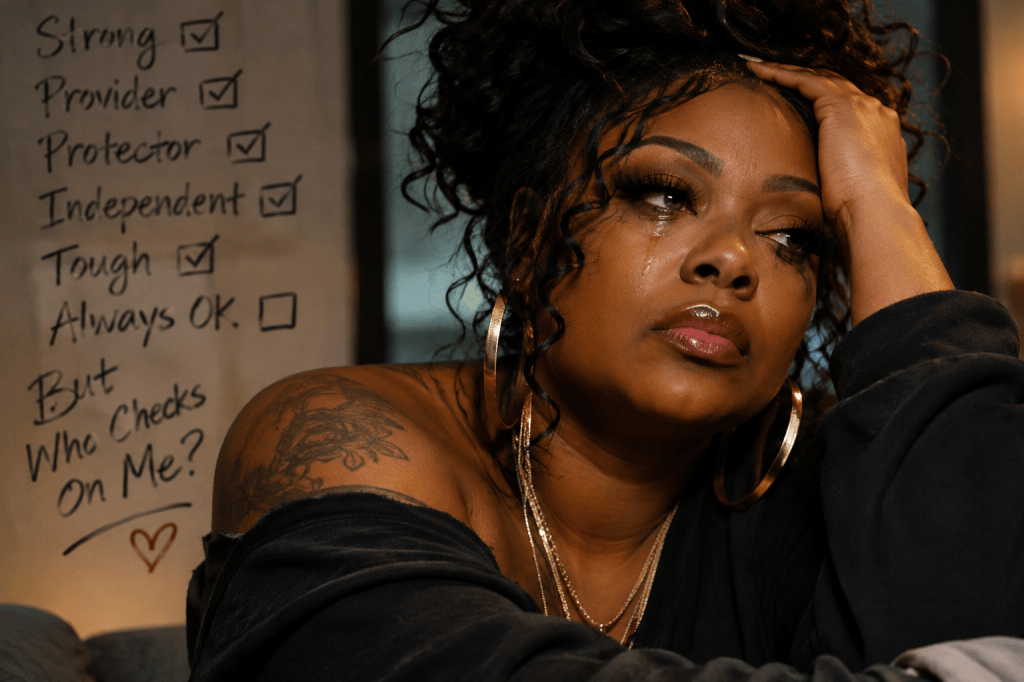
The Strong Black Woman stereotype, the weight of survival, and why we keep confusing self-protection with personality.
Let’s get something clear. I’m not dismissing the experiences of other women. Women from every background are shaped by what they live through. But I can only speak from the perspective I know: being a melanated Black queen.
Black women are expected to be strong, but not too strong. Independent, but not intimidating. Confident, but not aggressive. We’re expected to carry the weight and somehow remain soft while doing it.
When we speak up, we’re difficult. When we take charge, we’re masculine. When we protect ourselves, we’re guarded. But has anybody stopped to ask what made her that way?
Strength has a cost
Researchers describe a cultural expectation known as the Strong Black Woman schema: the pressure to be resilient, selfless, dependable, and strong—even when you need support yourself.
A 2022 review of 25 years of research found that this expectation can leave little room for vulnerability or prioritizing personal needs. Read the research.
There’s a difference between choosing to be strong and feeling like you have no choice. When everyone depends on you, doing everything yourself can become second nature. Asking for help may feel uncomfortable. Depending on someone may feel risky.
When survival follows you into relationships
A 2022 study connected pressure to demonstrate strength and suppress emotions with psychological distress among African American women. A 2026 review explored how these expectations can affect romantic relationships, including vulnerability, independence, and prioritizing a partner’s needs.
Read the 2022 study. · Read the 2026 review.
Think about it: You can want partnership but struggle to let someone help. You can want intimacy but shut down when things get uncomfortable. Those patterns may have a history—but understanding where they come from doesn’t mean they can’t hurt someone.
Is she masculine, or has she learned to protect herself?
Assertiveness, independence, and taking charge are often labeled masculine. But those are cultural labels, not diagnoses. Being a woman with boundaries doesn’t make her difficult, and being independent isn’t automatically a flaw. Research on gender stereotypes shows how expectations shape the way behavior is judged.
And accountability still matters. A painful past may explain a defense mechanism; it doesn’t excuse mistreating someone. Healing asks us to recognize our patterns and take responsibility for how they affect others.
You cannot demand softness while creating an environment that requires armor.
A woman can work on being less guarded. A partner can help build an environment where trust, consistency, and respect make vulnerability feel safe. Neither person gets a free pass.
I don’t believe Black women should have to shrink themselves to make others comfortable. But I do believe we all have work to do. Maybe we need to stop debating whether a woman is too masculine, too aggressive, or too independent—and start asking what she’s been carrying.
Maybe the goal isn’t to become more masculine or feminine. Maybe the goal is to become whole.
Being strong should be a choice—not a role a woman is forced to perform every day.
Before you call her hard, ask yourself: Have you created an environment where she can finally feel safe enough to be soft?
Research note: These studies identify patterns and associations. They do not establish that every Black woman’s experiences have the same cause.
REAL B | WHAT’S TEA?


Leave a Reply